
What is MOONRAKER?
MOONRAKER is a series of three complementary pragmatic Phase III trials investigating the role of Finerenone in real-world heart failure populations across the ejection fraction spectrum and range of clinical presentations.
Study Design
Three complementary Phase III trials evaluating finerenone across the ejection fraction spectrum and clinical presentations of heart failure.

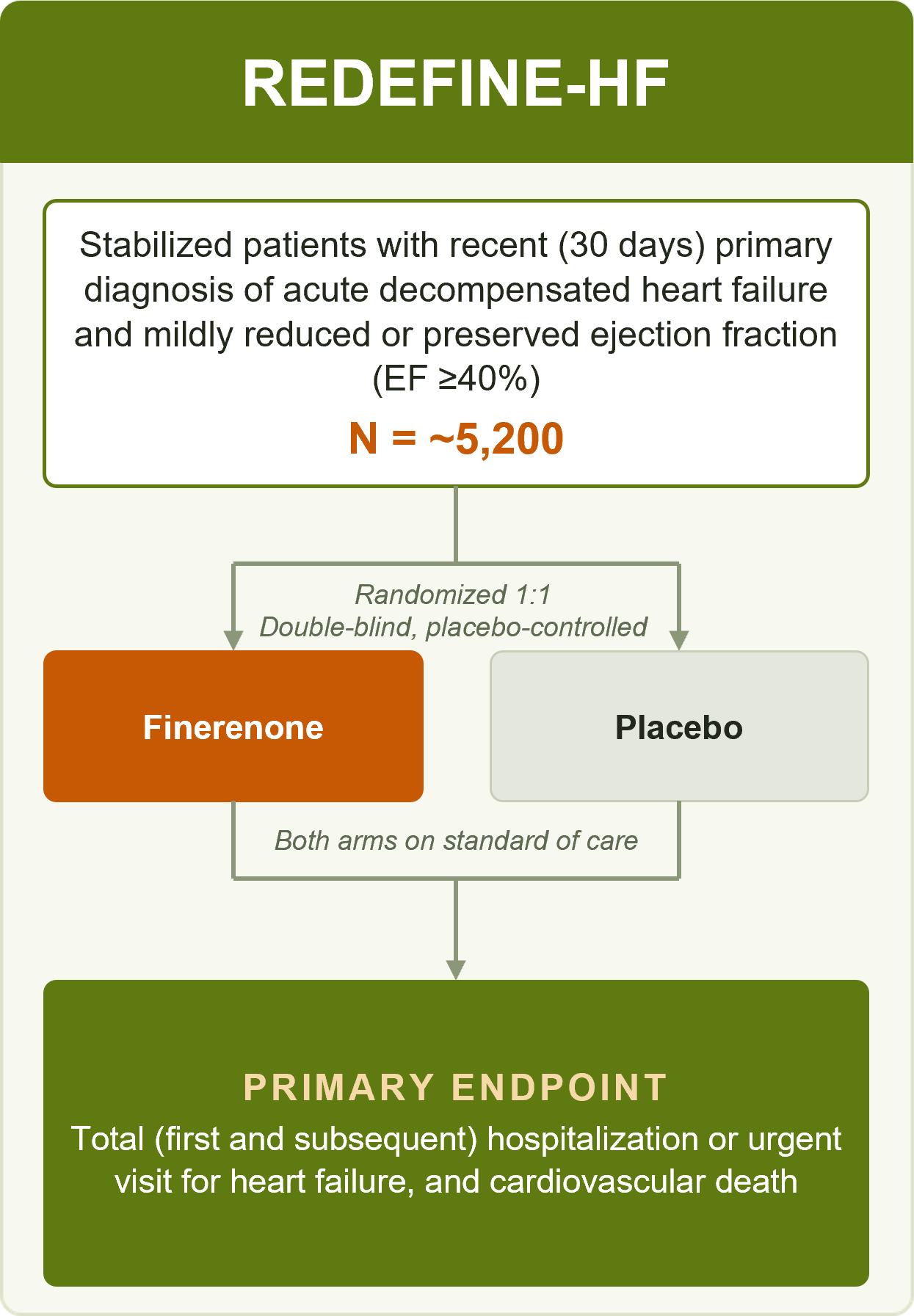
A double-blind, placebo-controlled trial, will evaluate Finerenone in patients with heart failure with mildly reduced or preserved ejection fraction and a recent worsening heart failure event.

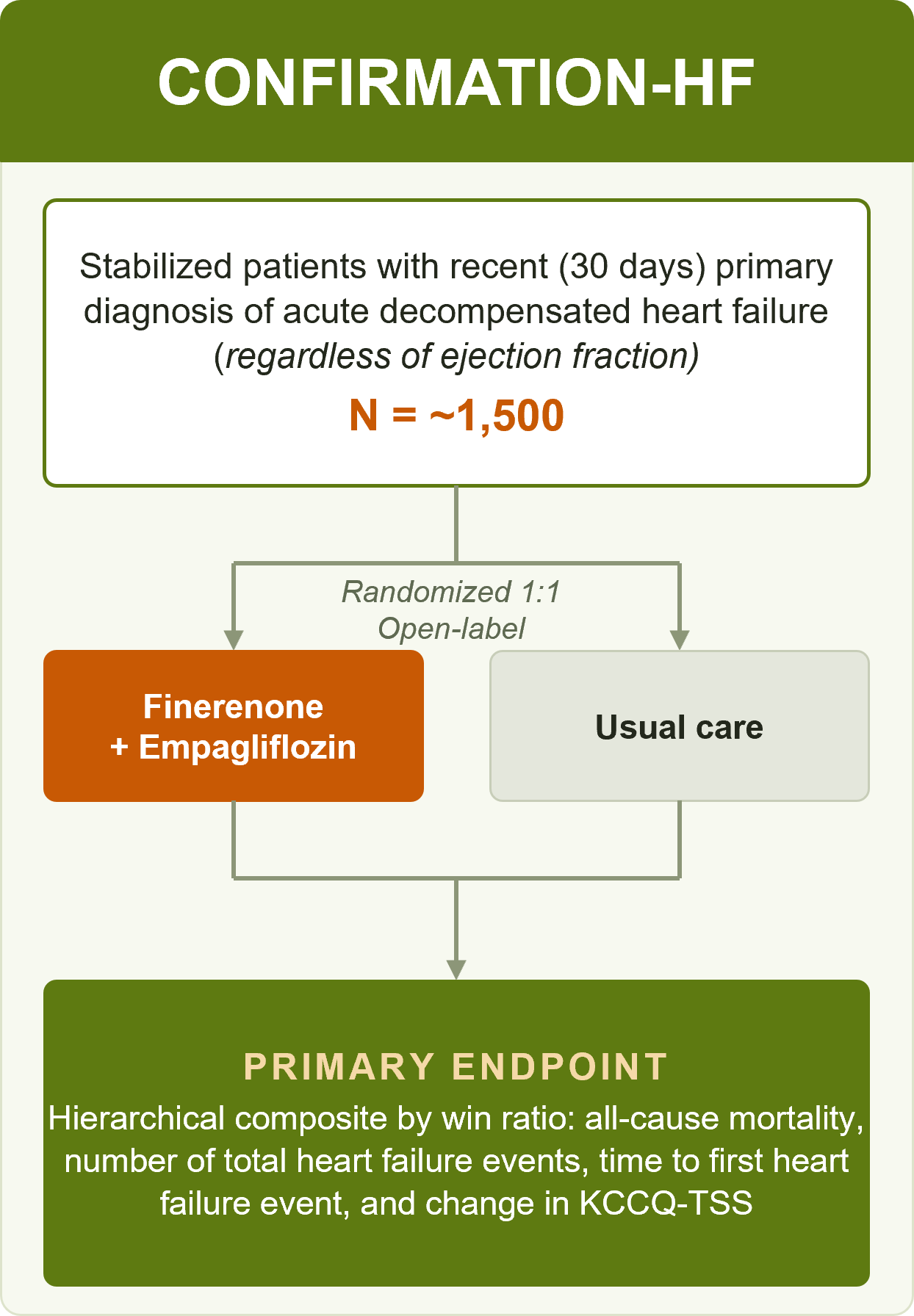
An open-label trial, will assess the implementation of early combined initiation of Finerenone and empagliflozin versus usual care in patients with a recent worsening heart failure event, irrespective of ejection fraction.

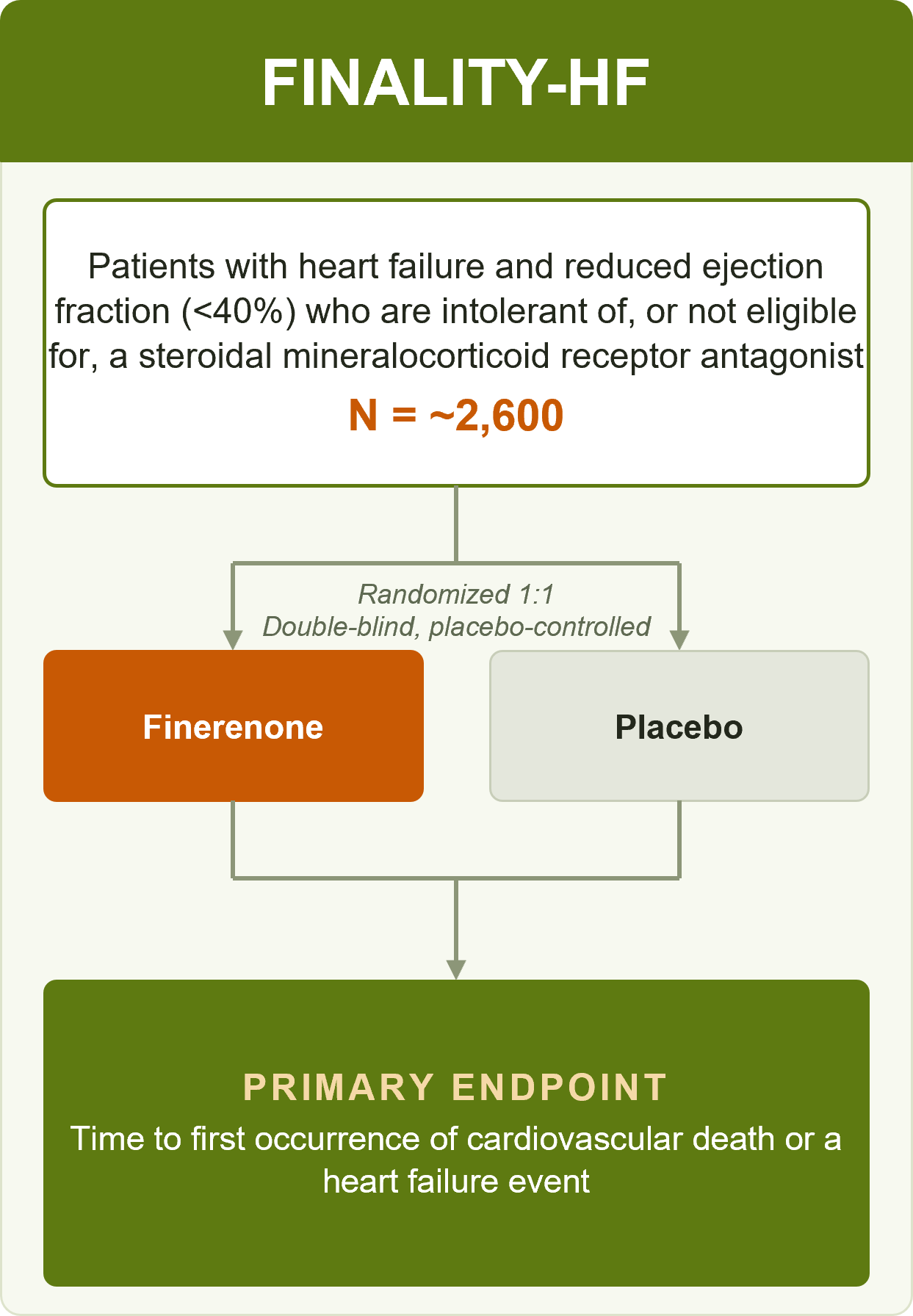
A double-blind, placebo-controlled trial, will evaluate Finerenone in patients with heart failure with reduced ejection fraction who are intolerant of or ineligible for a steroidal Mineralocorticoid Receptor Antagonists (MRAs).

Heart Failure Global Burden
More than 55 million people live with heart failure worldwide, making it one of the most common reasons for hospitalization worldwide1. Despite significant advancement in the field, prognosis remains poor with 1-year mortality ranging from 5%-34% depending on population and care setting.
Role of Mineralocorticoid Receptor Antagonists in Heart Failure
In heart failure with mildly reduced or preserved ejection fraction, steroidal mineralocorticoid receptor antagonists (MRAs) have not shown conclusive benefit2; in heart failure with reduced ejection fraction, where the benefit of MRAs is established, a substantial proportion of patients remains untreated because of intolerance or ineligibility.
The FINEARTS-HF trial showed that the non-steroidal MRA finerenone reduced a composite of cardiovascular death and total worsening heart failure events in patients with mildly reduced or preserved ejection fraction3. The three MOONRAKER studies aim to build on those findings by addressing:
1. Patients at high risk following a recent worsening heart failure event;
2. Feasibility of early combined initiation of finerenone and a sodium-glucose cotransporter-2 (SGLT2) inhibitor, and;
3. Patients with reduced ejection fraction who cannot tolerate or are not eligible for a steroidal MRA.





- Valente V, Laborante R, et al. The Global Epidemiology of Heart Failure: A Comprehensive and Contemporary Review. Eur J Heart Fail. 2026 Apr 7:xuag121. ↩︎
- Pitt B, Pfeffer MA, et al. Spironolactone for heart failure with preserved ejection fraction. N Engl J Med. 2014 Apr 10;370(15):1383-92. ↩︎
- Solomon SD, McMurray JJV, et al. Finerenone in Heart Failure with Mildly Reduced or Preserved Ejection Fraction. N Engl J Med. 2024 Oct 24;391(16):1475-1485. ↩︎